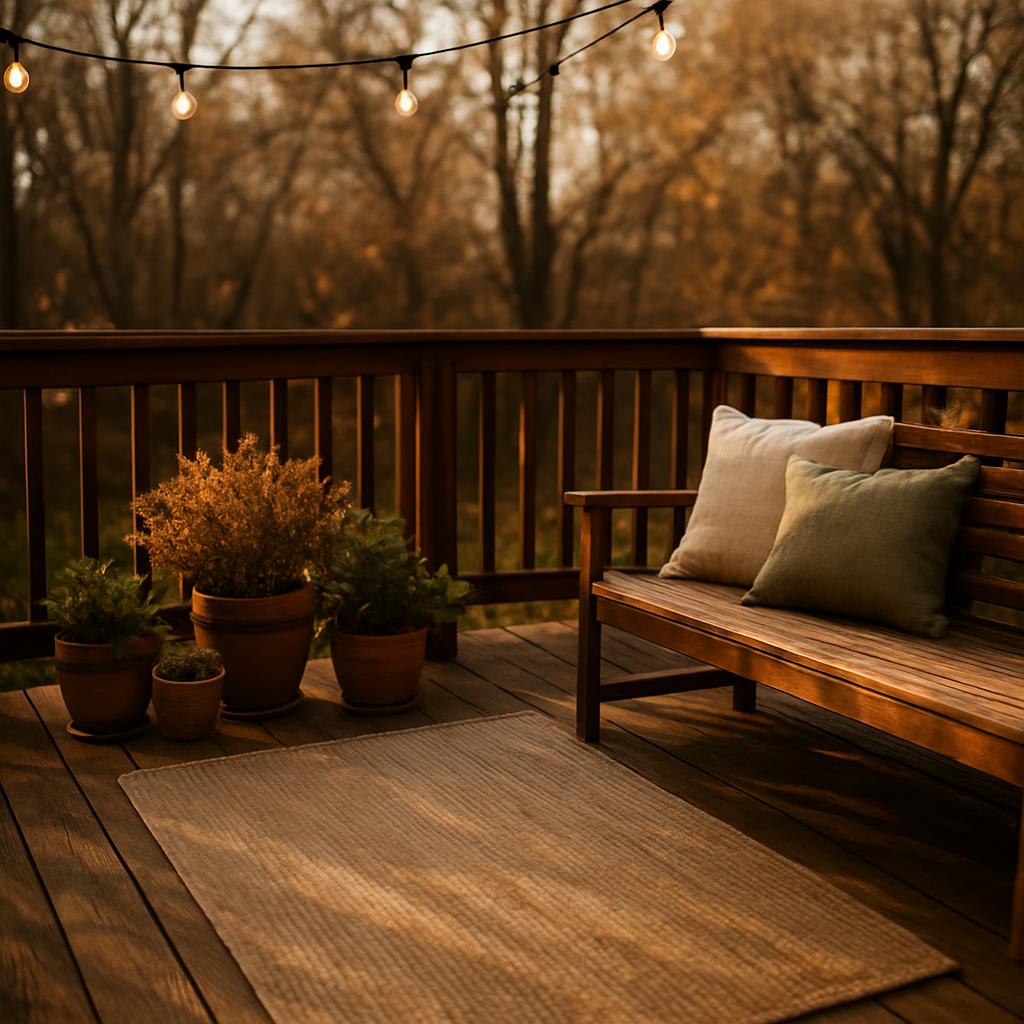
The best decorate deck ideas combine durable furniture, layered lighting, container plants, and textiles arranged around how you actually use the space, rather than adding items one at a time. A deck that feels finished usually has a clear layout, a simple color palette, and a few focal points instead of a random mix of decorations. This guide walks through planning, costs, common mistakes, and when it makes sense to call in a professional.
Key takeaways
- Start with layout and function before buying any decor, so furniture placement makes sense for how you use the deck.
- Lighting, rugs, and plants are the three fastest ways to make a deck feel finished without major construction.
- A mid-size deck can be decorated well for around $800 to $1,000, though prices vary with material quality.
- Poor drainage planning around planters is one of the most common and damaging deck decorating mistakes.
- Heavy additions like pergolas, built-in planters, or wired lighting may need a licensed professional for safety and code reasons.
What Are the Best Decorate Deck Ideas for Any Style?
The most effective decorate deck ideas work in layers: structure first, then comfort, then detail. That means starting with a layout that separates seating, dining, or cooking areas, then adding furniture built for outdoor use, and finishing with lighting, textiles, and plants.
Zoning matters more than most people expect. A deck that mixes a dining table, a lounge chair, and a grill without any separation tends to feel cluttered even if each piece is nice on its own. Simple tools like a rug or a change in furniture grouping can visually divide a 12-by-16-foot deck into two or three zones without adding any walls.
- String lights or lanterns for ambient evening light
- An outdoor rug to anchor a seating area
- Container plants in varied heights for texture
- Weatherproof cushions and throw pillows for color
- A shade sail or pergola for daytime comfort
- A small fire pit or fire table as a focal point
- Outdoor curtains for privacy and softness
Color palette is where a lot of decks lose cohesion. Picking two or three main colors and repeating them across cushions, planters, and rugs makes a space read as intentional rather than thrown together. For plant choices, newer flower varieties bred for container growing and heat tolerance, like those covered in recent garden variety releases, can add long-lasting color without constant replanting.
How Do You Plan and Execute a Deck Decorating Project?
Planning a deck decorating project works best as a short sequence of steps, done in order, rather than buying decor piece by piece. Skipping ahead to furniture before checking the deck's condition is one of the most common reasons projects go over budget.
- Measure the deck and sketch rough zones for seating, dining, or plants.
- Check the deck surface, railings, and fasteners for any needed repairs before adding weight.
- Set a total budget range and decide how much goes to furniture versus accessories.
- Choose a simple color and material theme, such as warm wood tones with navy textiles.
- Buy or arrange furniture first, since it sets the scale for everything else.
- Add lighting and layer in rugs, cushions, and throws.
- Finish with plants and small decorative details last, once the main layout is settled.
Doing furniture and structural checks before decor prevents wasted money. If a railing is loose or a board is soft, adding a heavy planter or string lights to that section can turn a decorating project into a repair project partway through. Checking the deck's readiness for weather is also worth doing early, especially before winter, using a general home readiness checklist like the one in preparing a home and garden for winter storms.
Which Deck Decorating Methods Compare Best on Cost and Effort?
Cost and effort vary a lot depending on which decorating method you choose, and most decks benefit from combining a few low-cost options with one or two bigger investments. The table below compares common choices.
|Decorating Method|Typical Cost|Effort Level|Best For| |---|---|---|---| |String lights|$20-$60|Low|Evening ambiance| |Outdoor rug|$40-$150|Low|Defining a seating zone| |Planters and plants|$80-$300|Low to medium|Color and privacy| |Shade sail or pergola|$150-$2,000+|Medium to high|Daytime comfort| |Fire pit or fire table|$100-$600|Medium|Focal point and warmth| |Full furniture set|$300-$2,000+|Medium|Comfort and function| |Paint or stain refresh|$100-$400 (DIY)|High (labor)|Refreshing an older deck
Low-cost, low-effort items like rugs and string lights give the fastest visual improvement, which is why most guides suggest starting there. Bigger structural items, like a pergola or a built-in bench, take more time and sometimes permits, so they are better treated as a second phase once the basic layout is working.
What Does a Deck Decorating Budget Look Like in Practice?
A realistic decorating budget for a mid-size deck, around 12 by 14 feet, often lands between $800 and $1,000 for a full refresh without major construction. The example below shows how that breaks down.
- Furniture set (table and four chairs, or a small sectional): $350
- Outdoor rug: $60
- String lights: $40
- Six planters with soil and plants: $120
- Cushions and throw pillows: $90
- Lanterns or solar lighting: $50
- Two small side tables: $70
- Miscellaneous supplies (hooks, fasteners, touch-up paint): $40
- Estimated total: about $820
This budget assumes mid-range furniture quality and no structural repairs. Choosing higher-end materials, like teak furniture or built-in planter boxes, can push the total well past $2,000, while a secondhand furniture find or DIY painted pallet seating can bring the same basic layout under $400. The key is deciding furniture quality first, since it usually takes up more than half of the total budget.
What Common Mistakes Ruin a Decorated Deck?
The most common mistake is poor drainage planning, especially around planters and rugs, which traps moisture against wood and speeds up rot and mold. A few other mistakes show up repeatedly on decks that stop looking good within a season.
- Poor drainage planning: planters without saucers or drainage holes let water pool on the deck surface and soak into boards.
- Oversized furniture: pieces that block walkways make even a large deck feel cramped and are harder to navigate.
- Non-weather-rated fabrics: indoor cushions and rugs fade, mildew, or fall apart quickly outdoors.
- Overloading weight limits: stacking heavy stone planters, large water features, or a hot tub without checking the deck's load capacity.
- Ignoring railing codes: adding solid privacy panels or planter boxes that block required railing height or sightlines.
- Unanchored lightweight decor: string lights, umbrellas, or lanterns that aren't secured can blow over or cause damage in wind.
Drainage issues are worth special attention because they're often invisible until the damage is done. Raising planters on small risers, choosing pots with drainage holes, and sloping a rug slightly away from doorways all help water move off the deck instead of sitting on it.
When Should You Hire a Landscaper or Outdoor Pro?
Hire a licensed landscaper or contractor when a decorating idea involves structural changes, electrical wiring, or heavy permanent features, since mistakes in these areas can affect safety and home value. Most lighting, textiles, and container plants are safe do-it-yourself projects.
A few situations call for a professional. Built-in pergolas, privacy walls, or large planter boxes need to be checked against the deck's load capacity and local building codes. Wired lighting, rather than plug-in or solar options, should go through a licensed electrician to avoid fire risk. Homeowners interested in adding more permanent outdoor features sometimes look at broader projects first, such as the electrical and design planning covered in wired backyard shed upgrades, which share some of the same wiring and permitting considerations as deck additions.
Drainage grading around the base of a deck, especially if water pools nearby after rain, is also a good reason to bring in a landscaper rather than guessing. A professional can check slope, soil, and existing drainage lines before any heavy container gardens or water features are added.
How Do You Decorate a Small or Narrow Deck?
Small decks decorate best with multi-use furniture and vertical space, since floor area is limited. A narrow deck under 100 square feet can still fit a seating area, plants, and lighting if pieces are chosen carefully.
Folding or stackable furniture lets a small deck switch between dining and lounging without permanent clutter. Railing planters and wall-mounted plant hooks add greenery without using any floor space, which matters on decks too narrow for standing pots. A large mirror or light-colored rug can also make a small deck feel bigger by reflecting light and visually extending the floor.
For very narrow decks, a bench with built-in storage can replace both seating and a side table in one footprint. Choosing two or three decor items instead of five or six keeps a small space from feeling overcrowded, which is a more common problem on small decks than on large ones.
Frequently asked questions
How do I protect deck decor through winter?
Store cushions, rugs, and lightweight lanterns indoors or in a weatherproof bin before the first hard freeze. Covering or moving planters can also prevent cracking, which ties into general seasonal prep for the whole yard.
What's the best lighting option if my deck has no outdoor outlet?
Solar-powered string lights, lanterns, and stake lights work well without any wiring and have improved significantly in brightness and battery life. Battery-powered puck lights are another easy option for steps or railings.
Can I decorate a rental deck without making permanent changes?
Yes, stick to removable items like rugs, potted plants, clip-on lights, and freestanding furniture. Avoid anything that requires drilling into railings or boards unless a landlord approves it in writing.
How often should deck decor be refreshed?
Most homeowners refresh cushions, rugs, and plants once a year, often in spring, while furniture and larger fixtures can last five to ten years with proper care. Fading fabric and cracked planters are the usual signs it's time for an update.
Do I need a permit to add a pergola or privacy screen to my deck?
It depends on the size, height, and local building codes, so checking with the city or county permitting office before building is important. Many areas require a permit for structures attached to the deck or taller than a certain height.