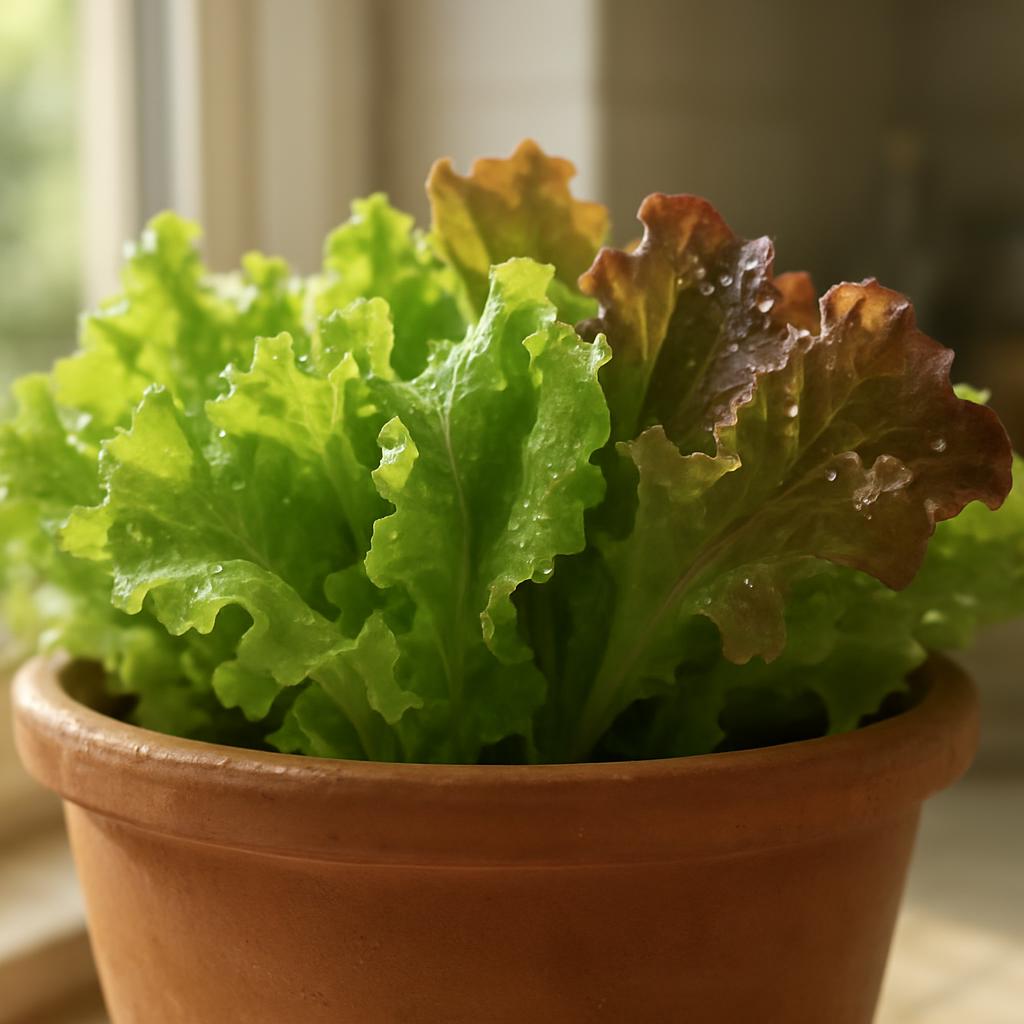
Yes, you can grow lettuce indoors, and it is one of the easiest vegetables for a beginner to try under a sunny window or a basic grow light. Lettuce has shallow roots, grows fast, and doesn't need pollinators, which makes it a good match for small indoor spaces like kitchen counters, windowsills, or a shelf in a spare room. With the right soil, enough light, and steady watering, most varieties are ready to pick within a few weeks of planting.
Key takeaways
- Lettuce can be grown indoors year-round with at least 10-12 hours of light a day from a sunny window or grow light
- A loose, well-draining potting mix with added compost works best for container lettuce
- Most leaf lettuce is ready to harvest in 30 to 50 days, loose-leaf types often faster than head types
- Cutting outer romaine leaves instead of pulling the whole plant lets it keep producing for weeks
- Overwatering and crowded planting are the most common reasons indoor lettuce fails
What type of soil is best for lettuce?
Lettuce grows best in a loose, well-draining potting mix that holds some moisture but never stays soggy. Garden soil alone is too heavy for containers because it compacts and drains poorly, so it's better to use a bagged potting mix made for vegetables or containers.
A good mix usually combines peat moss or coconut coir, perlite or vermiculite for drainage, and a moderate amount of compost for nutrients. Lettuce likes a slightly acidic to neutral soil, roughly pH 6.0 to 6.8, and does not need heavy feeding the way tomatoes or peppers do. Too much raw nitrogen, such as fresh manure, can cause leaves to grow fast but taste bitter.
Container depth matters more than most people expect. Because lettuce roots are shallow, a pot or tray only 6 to 8 inches deep is enough, which makes it practical for small kitchen counters or shelving units.
- Potting mix: light, fluffy, holds moisture without staying wet
- Compost: adds slow-release nutrients, mix in about 20 to 30 percent
- Drainage material: perlite or coarse sand keeps roots from sitting in water
- pH range: 6.0 to 6.8 is ideal for most lettuce varieties
How long does it take to harvest lettuce after planting?
Most lettuce is ready to harvest 30 to 50 days after planting, depending on the variety and how it's grown. Loose-leaf types like 'Black Seeded Simmons' or 'Red Sails' mature fastest, often ready for a first cutting in about four weeks, while head-forming types like iceberg or butterhead take closer to 60 to 70 days for a full head.
Indoor growing can shift this timeline slightly. Without full outdoor sun, growth tends to be a bit slower unless a grow light is running at least 10 to 12 hours a day. On the other hand, indoor temperatures stay steady, so there's no slowdown from cold snaps or unexpected frost the way there would be outdoors.
You don't have to wait for a full harvest, either. Many indoor growers start snipping a few outer leaves as soon as the plant has four or five true leaves, usually within two to three weeks, and keep harvesting small amounts every few days as the plant keeps producing.
| Lettuce type | Days to first harvest | Growth habit |
|---|---|---|
| Loose-leaf (e.g. Black Seeded Simmons) | 28-35 days | Cut-and-come-again |
| Butterhead (e.g. Buttercrunch) | 45-55 days | Loose head |
| Romaine | 60-70 days for full head, sooner for leaves | Upright head |
| Iceberg | 70-85 days | Tight head, slowest |
How to harvest romaine lettuce so it keeps growing?
Harvest romaine by cutting the outer leaves about an inch above the soil line, leaving the center and growing point intact so the plant keeps producing new leaves. This method is often called cut-and-come-again, and it can stretch one planting into several weeks of harvests instead of a single cutting.
Start picking once the plant has at least five or six mature leaves, usually three to four weeks after planting. Take only the largest outer leaves each time, never more than a third of the plant at once, since removing too much slows regrowth and stresses the plant.
If you'd rather grow a full romaine head, wait until the plant reaches close to its mature size, then cut the entire head about an inch above the soil. In many cases, the stump will send up a few small new leaves afterward, though regrowth is usually thinner than the first harvest.
- Wait until the plant has five or more true leaves before the first cut
- Harvest only the outer, larger leaves and leave the center bud untouched
- Cut with scissors or a sharp knife about an inch above the soil
- Water and feed lightly after each harvest to support new growth
- Repeat every few days to a week as new leaves mature
What do you need to set up to grow lettuce indoors?
Growing lettuce indoors takes four basic things: a container with drainage holes, potting mix, enough light, and a consistent watering routine. None of this requires special equipment, though a grow light makes a noticeable difference in winter when natural daylight is weak and short.
A south- or west-facing window can supply enough light in spring and summer, but from late fall through winter, most homes don't get the 10 to 12 hours of bright light lettuce needs. A simple LED grow light on a timer, placed 6 to 12 inches above the leaves, solves this and keeps growth steady regardless of the weather outside, which is especially useful during the stretch covered in guides on getting the garden ready for winter, when outdoor growing stops.
Temperature also matters. Lettuce grows best between 60 and 70°F and can bolt, or send up a bitter flower stalk, if a room gets much hotter than 75°F for long stretches. Keeping pots away from heating vents and south-facing glass in summer helps avoid this.
- Container: at least 6 inches deep with drainage holes
- Light: 10-12 hours daily, natural or LED grow light
- Temperature: 60-70°F is the sweet spot
- Water: consistent moisture, never fully dry or waterlogged
Which lettuce varieties grow best indoors?
Loose-leaf varieties generally perform best indoors because they grow fast, tolerate lower light than head types, and can be harvested continuously. Compact varieties bred for containers or microgreens trays are especially well suited to tight indoor spaces.
Head lettuce, including iceberg and crisphead types, is harder to grow indoors because it needs more light and a longer growing period to form a dense head. Romaine sits in between: it grows a bit slower than loose-leaf types but tolerates indoor conditions reasonably well, especially if harvested leaf by leaf rather than as a whole head.
| Variety type | Indoor suitability | Space needed per plant |
|---|---|---|
| Loose-leaf (e.g. Salad Bowl, Red Sails) | Excellent | 4-6 inches |
| Romaine | Good | 6-8 inches |
| Butterhead | Good | 6-8 inches |
| Iceberg/crisphead | Difficult indoors | 10-12 inches |
How do you plant and care for lettuce indoors step by step?
Lettuce can be sown directly into its growing container, which skips the transplanting step and reduces root stress. A basic routine of planting, light, and watering keeps most indoor crops healthy from seed to harvest.
A simple example: a 12-inch-wide, 7-inch-deep container can hold three to four loose-leaf lettuce plants spaced about 4 inches apart, or two romaine plants spaced 6 inches apart. A kitchen windowsill might fit two or three of these containers staggered a week apart, so new leaves are ready on a rolling basis instead of all at once.
- Fill the container with moist potting mix, leaving half an inch of space at the top
- Sow seeds a quarter-inch deep, or lightly press seeds into the surface since lettuce seed needs some light to germinate
- Water gently with a spray bottle to avoid washing seeds away
- Place under a grow light or in a bright window once seedlings appear, usually within 5 to 10 days
- Thin seedlings so plants are spaced correctly for their variety
- Water whenever the top half-inch of soil feels dry, keeping it evenly moist
- Begin harvesting outer leaves once plants have five or more true leaves
Persistent problems like yellowing leaves, mold at the soil line, or stunted growth that doesn't improve with better light and watering can sometimes point to a soil-borne disease or pest issue, and a local extension office can help identify it and suggest a fix suited to your region.
What mistakes should you avoid when growing lettuce indoors?
The most common mistake is overwatering, which suffocates roots and leads to yellow, mushy leaves. Lettuce likes consistent moisture, not standing water, so a container with good drainage and a saucer to catch excess is important.
Planting too deep or too close together are the next most frequent issues. Lettuce seed only needs a light covering of soil, and crowded seedlings compete for light and often end up leggy and weak. Thinning seedlings early, even though it feels wasteful, gives the remaining plants room to grow strong leaves.
Not enough light is another frequent cause of poor growth indoors, especially in winter. Leggy, pale seedlings reaching toward a window are a clear sign the plant isn't getting enough light and would benefit from a grow light moved closer.
- Overwatering: yellow leaves, root rot, mold on soil surface
- Planting too deep: poor or uneven germination
- Crowding: leggy, weak stems and small leaves
- Low light: pale color, stretched stems, slow growth
- Heat stress: bitter taste, early bolting
Frequently asked questions
Do you need a grow light to grow lettuce indoors?
Not always, but it helps a lot in fall and winter when natural daylight is shorter and weaker. A south- or west-facing window can work in spring and summer, but a basic LED grow light running 10 to 12 hours a day gives more reliable results year-round.
Can you regrow lettuce from the stump of a store-bought head?
Yes, romaine and some other lettuce stumps can regrow if placed in a shallow dish of water with the cut end down, kept in bright light, and changed every couple of days. This usually produces a small batch of new leaves within one to two weeks, though the regrowth is typically thinner than a plant grown from seed.
How often should you water indoor lettuce?
Check the soil every day or two and water whenever the top half-inch feels dry, since small containers dry out faster than garden beds. Aim for evenly moist soil rather than a fixed schedule, since light, temperature, and pot size all affect how fast it dries.
Can you grow lettuce indoors without soil, using hydroponics?
Yes, lettuce is one of the most common vegetables grown hydroponically indoors because its shallow roots and fast growth suit nutrient-water systems well. Small countertop hydroponic kits are widely available and often produce slightly faster growth than soil containers.
Does indoor lettuce taste different from garden-grown lettuce?
Not significantly, as long as the plant gets enough light and consistent water. Lettuce grown too warm or under stress, indoors or outdoors, tends to turn bitter, so the growing conditions matter more than whether it's indoors or outside.