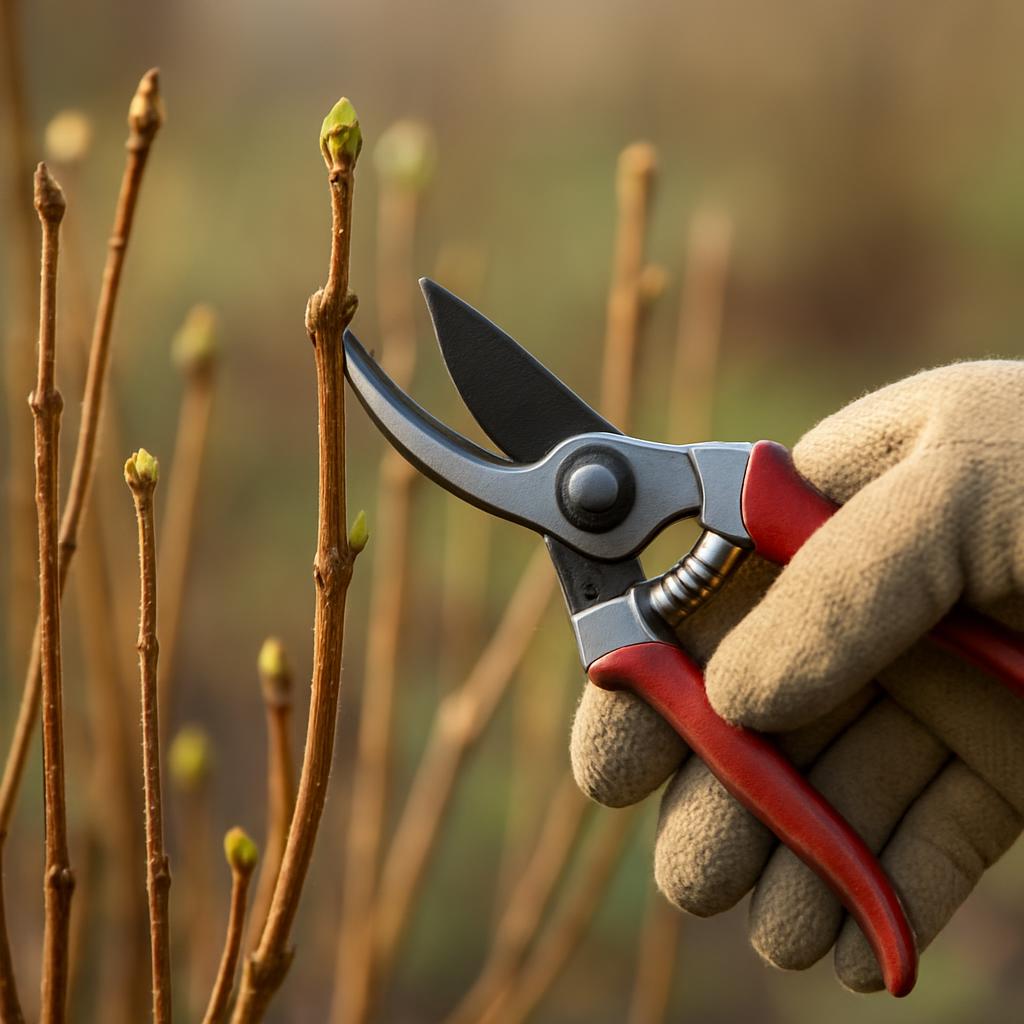
How to prune hydrangeas in spring depends almost entirely on which type you have: new-wood bloomers like panicle and smooth hydrangeas can be cut back hard before leaves emerge, while old-wood bloomers like bigleaf and oakleaf hydrangeas should only get a light cleanup. Pruning the wrong type at the wrong time is the single biggest reason hydrangeas fail to flower. Getting the timing and technique right takes just a few minutes of identification before you ever pick up the shears.
Key takeaways
- Bigleaf and oakleaf hydrangeas bloom on old wood, so spring pruning should only remove dead stems, not live flower buds.
- Panicle and smooth hydrangeas bloom on new wood and can be cut back hard in late winter or early spring before growth starts.
- Always identify the hydrangea type before cutting, since pruning the wrong one at the wrong time removes an entire year's blooms.
- Wait until new leaf buds swell in spring so you can see which stems survived winter before cutting anything.
- Clean, sharp bypass pruners give cleaner cuts and spread less disease than old, dull shears.
How Do You Know Which Type of Hydrangea You Have?
You can identify your hydrangea type by looking at its flower shape, leaf shape, and stem growth pattern, since each type blooms on different wood and needs different pruning.
Bigleaf hydrangeas, including mophead and lacecap varieties, have rounded or flat flower clusters and thick, shiny, oval leaves. They set next year's flower buds on this year's stems in late summer, which is why cutting them back hard in spring removes the buds before they ever open. Oakleaf hydrangeas, named for their lobed leaves that resemble oak foliage, follow the same old-wood pattern.
Panicle hydrangeas, often sold under names like 'Limelight' or 'Little Lime,' produce cone-shaped flower clusters and bloom on new growth made that same spring. Smooth hydrangeas, such as the classic 'Annabelle,' have rounded white or pink blooms and also flower on new wood, which makes both types much more forgiving to prune hard.
If you planted a hydrangea without a tag or inherited one with an existing landscape, a photo of the leaf shape and flower cluster is usually enough for a local nursery or extension office to identify it. This matters more than it might seem, because guessing wrong can mean losing a season of blooms.
When Do You Prune Hydrangeas?
You prune new-wood hydrangeas in late winter or early spring, before leaves emerge, and you prune old-wood hydrangeas right after they finish flowering in summer, not in spring at all.
Spring pruning for old-wood types should be limited to removing clearly dead or damaged stems, since any live stem left from last summer is already carrying this year's flower buds. Cutting those stems back in spring, even by a few inches, can mean no blooms at all on bigleaf or oakleaf hydrangeas that year.
| Hydrangea type | Blooms on | Best time to prune | Light needs |
|---|---|---|---|
| Bigleaf (mophead/lacecap) | Old wood | Right after flowers fade in summer | Morning sun, afternoon shade |
| Panicle (PeeGee type) | New wood | Late winter to early spring | Full sun |
| Smooth (Annabelle type) | New wood | Late winter to early spring | Part sun to full sun |
| Oakleaf | Old wood | Right after flowering | Part shade |
| Climbing | Old wood | After flowering, rarely needed | Shade to part sun |
Regional climate shifts this timing a little. In warmer Southern states, new growth may start in February, while gardeners in the Upper Midwest or New England often wait until April. The safest rule is to watch the plant rather than the calendar: once leaf buds visibly swell, it's time to act.
How to Prune Hydrangeas in Spring
To prune hydrangeas in spring, wait until buds swell, then cut new-wood types back by about a third and old-wood types only where stems are dead, using clean cuts just above a healthy bud.
- Wait until new leaf buds swell on the stems, which shows you which wood survived winter.
- Remove any stems that are brittle, gray, or show no green underneath when scratched lightly with a thumbnail.
- For panicle and smooth hydrangeas, cut remaining stems down to 12 to 18 inches from the ground, or by about one-third of their height.
- For bigleaf and oakleaf hydrangeas, leave all live stems in place and only clear out dead wood and winter-damaged tips.
- Make each cut at a slight angle about a quarter inch above a healthy outward-facing bud.
- Clear cut stems away from the base and refresh mulch to protect roots as temperatures swing.
This approach keeps new-wood hydrangeas compact and encourages the larger, sturdier stems that support big blooms without flopping over after rain. 'Limelight' and 'Little Lime' panicle hydrangeas respond especially well to this kind of hard spring cut, often producing fuller flower heads than unpruned plants.
For old-wood types, spring pruning is really just winter cleanup. If a hard freeze browned the tips of a bigleaf hydrangea, trim back only to where the stem is green inside, since the lower buds on that same stem are often still alive and ready to bloom.
How to Trim Hydrangeas in Spring: Tools and Techniques
Trimming hydrangeas in spring is best done with sharp bypass pruners for thin stems and loppers for anything thicker than a pencil, making one clean cut rather than sawing or crushing the stem.
- Bypass pruners: best for live stems up to about half an inch thick, giving a clean cut that heals quickly.
- Loppers: needed for older, woody stems on established panicle or oakleaf hydrangeas.
- Rubbing alcohol or disinfectant wipes: used to clean blades between plants, especially if any stem looked diseased.
- Garden gloves: protect hands from rough bark and any lingering sharp seed heads from last year's blooms.
Dull or anvil-style shears tend to crush stems instead of slicing them, which leaves a ragged wound that heals slowly and can invite fungal problems. Wiping blades with alcohol between plants is a simple habit that limits the spread of common hydrangea diseases like leaf spot.
Light trimming is different from hard pruning. Trimming usually means snipping spent flower heads, crossing branches, or a few wayward stems, while pruning is the deliberate cutback described above. Both can happen in the same spring visit, but they serve different purposes: trimming tidies the plant's shape, while pruning controls its size and bloom production.
What Happens If You Prune Hydrangeas at the Wrong Time?
Pruning at the wrong time mainly costs you flowers for that year, since cutting old-wood hydrangeas in spring removes buds that are already formed and ready to open.
A bigleaf hydrangea pruned hard in April, for example, may grow lush green leaves all summer but produce few or no blooms, simply because the stems carrying flower buds were cut away before they had a chance to open. The plant itself usually survives fine; it just skips a flowering season.
Cutting new-wood types too late can also reduce blooms, though less drastically. If panicle or smooth hydrangeas aren't pruned until stems have already leafed out heavily, the plant spends extra energy regrowing instead of building flower clusters, which can delay and shrink the summer bloom.
The fix for a mistimed cut is mostly patience: skip hard pruning the next year on an old-wood type that lost its blooms, and let it rebuild a full set of stems before trimming again after flowering.
What Are Common Hydrangea Pruning Mistakes?
The most common hydrangea pruning mistakes are cutting old-wood types in spring, pruning too hard every year, and deadheading incorrectly late in the season.
- Pruning old-wood types in spring: removes the current year's flower buds before they open.
- Over-pruning new-wood types: cutting stems too low each year can weaken the plant over time instead of strengthening it.
- Deadheading too late or too deep: cutting spent blooms far down the stem in late summer removes next year's buds on old-wood hydrangeas.
- Using dull tools: crushes stems and slows healing, raising disease risk.
- Ignoring plant tags: skipping identification leads directly to the wrong pruning method.
Improper deadheading deserves special attention, since it's an easy habit to get wrong. On bigleaf and oakleaf hydrangeas, deadheading should mean snipping just the spent flower cluster and a few inches of stem, done soon after blooms fade, not a deep cutback in fall or spring. On panicle and smooth hydrangeas, old flower heads can be left on through winter for visual interest and removed as part of the spring pruning cut instead.
If a hydrangea consistently fails to bloom despite correct pruning, the cause may not be pruning at all. Too much shade, late frosts damaging buds, or over-fertilizing with nitrogen can all suppress flowering, and a local nursery can help rule out soil or light issues specific to the site.
How Do You Prune Hydrangeas After a Harsh Winter?
After a harsh winter, prune hydrangeas by waiting for new growth, then cutting back only to live, green wood, since cold damage can hide how much of the stem actually survived.
A hard freeze can kill stem tips on bigleaf and oakleaf hydrangeas even while the lower buds stay alive, so cutting the whole plant down after a rough winter can remove flowers that were never actually lost. Scratching the bark with a fingernail to check for green tissue underneath is a reliable way to find the line between live and dead wood before cutting.
Homeowners who prepared their beds before the first hard freeze, following steps like those in winter storm garden prep guidance, often see less dieback because mulch and wind protection kept root zones and lower stems insulated. Plants left fully exposed to repeated freeze-thaw cycles tend to need more corrective pruning in spring.
If an entire hydrangea looks dead with no green anywhere on the stems, don't remove it right away. Many hydrangeas, especially smooth and panicle types, can resprout from the base even after looking completely lost, so it's worth waiting until late spring before giving up on an old-wood or new-wood planting.
How Do You Plan Pruning Into a Hydrangea Garden Bed?
You plan pruning into a hydrangea bed by grouping plants with the same bloom-wood type together, so one pruning schedule works for the whole area instead of guessing stem by stem.
For example, a small foundation bed might pair three 'Limelight' panicle hydrangeas along the back with a row of 'Annabelle' smooth hydrangeas in front, since both bloom on new wood and can be cut back together in early spring on the same visit. Adding an oakleaf hydrangea to that same bed would mean remembering a separate, old-wood schedule, which is easy to forget without a plant tag or garden map.
Newer compact hydrangea varieties, part of the wave of improved flower selections bred for smaller yards, often need less aggressive pruning than older cultivars because they're already bred to stay compact. Checking a plant's mature size on the tag before planting can cut down on how much hard pruning is needed later.
A simple garden journal or even a phone photo taken each spring, labeled by bed location, makes it much easier to remember which hydrangeas got a hard cutback last year and which only had dead wood removed, especially once a bed has more than two or three plants.
Frequently asked questions
Can you prune hydrangeas in fall instead of spring?
It's not recommended for most types. Old-wood hydrangeas should be pruned right after flowering in summer, and new-wood types are best left alone until late winter or early spring, since fall pruning can expose fresh cuts to winter cold.
Will a hydrangea still bloom if you cut it back too hard?
New-wood types like panicle and smooth hydrangeas usually still bloom the same year even after a hard cutback. Old-wood types like bigleaf and oakleaf hydrangeas often skip blooming entirely that season if cut back hard in spring.
How do you prune panicle hydrangeas for bigger blooms?
Cut panicle hydrangea stems back by about a third in early spring and remove any thin, weak growth near the base. Fewer, sturdier stems typically produce larger flower clusters than a plant left to grow many thin stems.
What's the difference between deadheading and pruning hydrangeas?
Deadheading just removes spent flower clusters to tidy the plant and is done soon after blooms fade. Pruning is a larger cutback that shapes the plant and controls its size, timed differently depending on whether it blooms on old or new wood.
Can you prune hydrangeas just to control their size?
Yes, but the timing still depends on the type. New-wood hydrangeas can be cut back for size every spring, while old-wood hydrangeas should only be sized down right after flowering to avoid losing next year's buds.