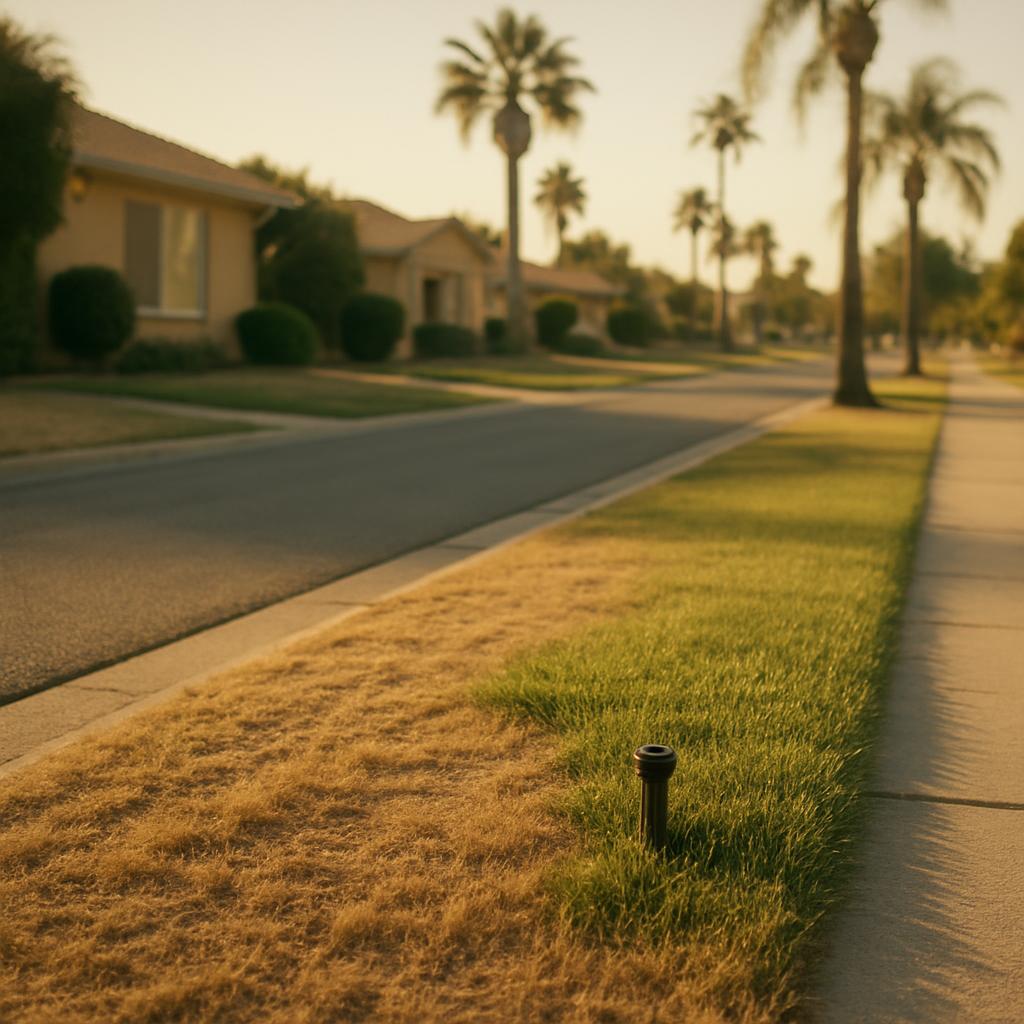
Southern California's largest water supplier ordered roughly 6 million residents to cut their outdoor watering down to a single day a week, a drought-era mandate that, according to reporting on the order, remains one of the most far-reaching residential lawn restrictions ever imposed in the United States. The episode continues to shape how water districts across the West write and enforce rules on lawns, and it offers a cautionary case study for homeowners anywhere water supplies run tight.
Key takeaways
- A 2022 order forced roughly 6 million Southern California residents onto a once-a-week outdoor watering schedule, a benchmark still referenced in drought planning today.
- The restrictions targeted lawns and landscaping specifically because outdoor irrigation is the single largest residential water draw in dry regions.
- Homeowners in drought-prone areas continue to face a choice between traditional turf and lower-water landscaping as water agencies keep tightening rules.
The Order and Who It Affected
The directive came from Southern California's regional water supplier, which told approximately 6 million residents across its service area to limit outdoor watering, including lawn irrigation, to just one day per week. The scale of the order was notable even for a region accustomed to drought messaging: few water restrictions in US history have applied to a population this large at once.
The move followed years of below-average rainfall and shrinking reservoir levels feeding the region's water supply. Officials framed the restriction as a response to an emergency-level shortage rather than a routine conservation request, signaling that voluntary cutbacks alone were no longer considered sufficient to protect the water system.
For homeowners, the practical effect was immediate: lawns accustomed to two or three waterings a week had to adjust to a fraction of that, forcing many residents to rethink irrigation schedules, grass selection, and whether traditional turf was sustainable at all under the new rules.
Why Lawns Are Always the First Target
Outdoor irrigation, and lawns in particular, is consistently the largest controllable share of residential water use in dry climates, which is why restrictions almost always single out watering days and lawn care before targeting indoor use. Water agencies can achieve faster, larger savings by limiting sprinkler schedules than by asking residents to change indoor habits like laundry or dishwashing.
That dynamic explains why the one-day-a-week model used in Southern California has since become a reference point for other water-stressed regions drafting their own emergency rules. When supply drops sharply, the fastest lever available to utilities is almost always outdoor watering policy rather than broader infrastructure fixes, which take years to implement.
The pattern also means lawn care routines that work in normal years, such as standard mowing and watering schedules covered in guides like spring mowing timing and height, often need to be adjusted on short notice once a drought order takes effect, since reduced watering changes how grass responds to cutting height and frequency.
What It Means for Homeowners Going Forward
The 2022 order has remained a point of reference because it illustrated how quickly a region can move from voluntary conservation requests to mandatory, enforceable limits once supply margins get thin enough. Homeowners in similarly drought-exposed parts of the West are increasingly treating one-day-a-week watering, or stricter, as a plausible scenario rather than a worst case.
That shift has accelerated interest in lower-water landscaping choices, including drought-tolerant turf varieties and reduced-lawn yard designs, as residents try to protect their property's appearance without depending on irrigation schedules that can be cut on short notice by a water district. Some of that same seasonal planning mindset applies to broader yard upkeep, including preparing outdoor spaces before seasonal weather shifts, as outlined in advice on getting yards ready before harsh weather.
For now, no single national standard governs how water agencies respond to drought, which means local rules remain the deciding factor for any homeowner managing a lawn in a water-stressed region. The Southern California order stands as the clearest large-scale example of how far those restrictions can go, and why residents in similar climates continue to watch local water-supplier announcements closely heading into dry seasons.