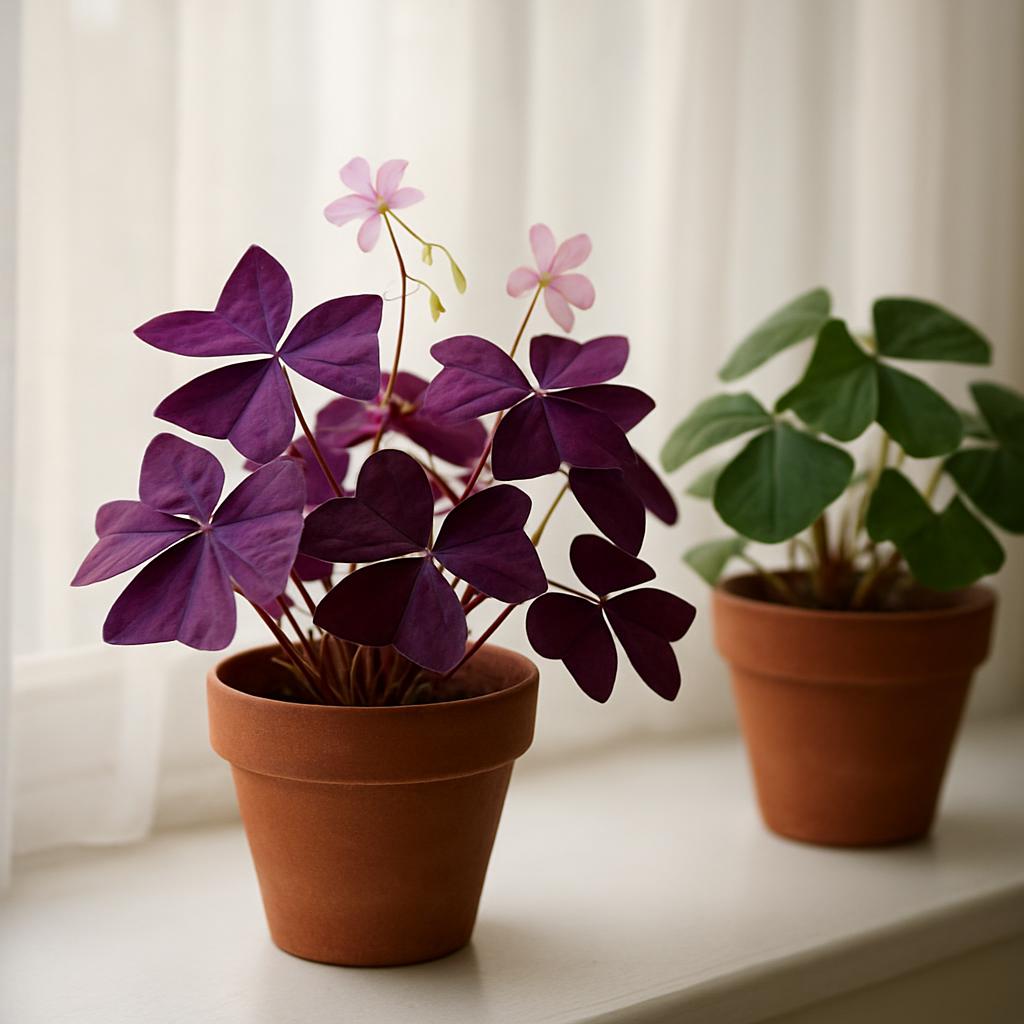
Shamrock plant care comes down to bright indirect light, water only when the top inch of soil has dried, light monthly feeding while the plant is in leaf, and a dry rest when the foliage collapses. That rest is the step most owners miss. The plant sold as a shamrock is an Oxalis that grows from small bulbs, and when its leaves yellow and flop, it is usually resting rather than dying.
Key takeaways
- The potted shamrock sold in March is an Oxalis, not the clover Irish tradition calls shamrock, and it grows from small bulbs.
- Bright indirect light, a well-drained mix and watering only when the top inch is dry prevent most problems; soggy soil is the main killer.
- Leaves that fold at night are normal, and leaves that die back after flowering or in summer heat usually signal dormancy.
- During dormancy, stop watering and feeding, trim off dead foliage, keep the pot cool, and wait for new shoots before resuming care.
- Repot or divide in spring as new growth starts, and keep the plant away from cats, dogs and horses, which the ASPCA lists as at risk.
What is a shamrock plant, and why is it sold around St. Patrick's Day?
The shamrock plant is Oxalis, usually the purple-leaved Oxalis triangularis or the green-leaved Oxalis regnellii, a bulb-grown houseplant from South America with clover-like leaves of three leaflets. Growers and retailers time it for St. Patrick's Day because the foliage looks like the traditional Irish emblem and the plants are easy to bring to full leaf in late winter. It is also called false shamrock, purple shamrock, love plant, good luck plant and wood sorrel.
It is not a true clover. The Old Farmer's Almanac notes that the houseplant is unrelated to clover but belongs to the wood sorrel genus, Oxalis, and describes purple shamrock as a subspecies of O. regnellii from Brazil. Other references treat the two names as one species, so labels in garden centers vary. The care is the same either way.
The distinction matters for one practical reason. Clover is a fibrous-rooted perennial. Oxalis stores energy in small bulbs, sometimes called corms or tubers, and that is why it has a rest period that clover does not. A plant bought in full leaf in March can look worn out by midsummer and still be healthy underground.
If you like houseplants sold as luck charms, lucky bamboo is another one, with very different needs: it lives in water and never goes dormant.
How much light does a shamrock plant need?
A shamrock plant needs bright, indirect light, such as an east window or a south or west window filtered by a sheer curtain. The Royal Horticultural Society lists Oxalis regnellii for partial shade, and indoors that translates to a bright room without hours of hot midday sun on the leaves.
Light affects color and shape. In dim rooms the stems stretch, the leaves lean toward the glass, and purple varieties lose depth of color. Scorched or bleached patches on the leaves mean the sun is too strong. A few hours of gentle morning sun is usually fine.
Temperature is tied to light because heat pushes the plant toward dormancy. The New York Botanical Garden's false shamrock guide recommends cool household temperatures of 60 to 70°F and says temperatures above 75°F can trigger dormancy and leaf drop. A bright window that turns hot in summer is a common cause of a sudden collapse.
Outdoors in summer, a shaded porch or a spot with morning sun works. Bring pots in before frost. The RHS rates O. regnellii as frost tender (H3 on its UK scale), and retailers' USDA zone ranges vary from about zone 6 to 10 depending on the source. In most of the US, treat it as a container plant and not a plant-and-forget perennial.
How often should you water a shamrock plant, and what soil does it need?
Water a shamrock plant when the top inch of soil is dry, and use a mix that drains quickly. Because the bulbs rot in soggy soil, a slightly dry plant recovers more easily than a waterlogged one. Plan on roughly every one to two weeks in active growth, adjusting for pot size, light and room temperature.
The RHS suggests a moisture-retentive but free-draining mix of equal parts loam, leaf mold or soilless compost, and grit. For a houseplant, a standard potting mix with a generous handful of perlite or coarse sand per few quarts does the same job. Use a pot with drainage holes, and empty the saucer after watering.
Water thoroughly until it runs out the bottom, then wait. Frequent small sips keep the top damp and the bulbs below stagnant. Wilting in a plant that is in leaf and was recently watered points to rot or a hot, cramped pot, not thirst. Check that the soil is not sodden and that the bulbs are firm.
Humidity is not a concern. Normal household air is fine, and misting adds nothing.
When and how should you feed it?
Feed a shamrock plant lightly, about once a month, only while it is producing leaves. The RHS advises a balanced liquid fertilizer monthly during growth. Many growers dilute it to half strength, which lowers the risk of salt buildup in a small pot.
Skip feeding in three situations: during dormancy, in the first weeks after repotting into fresh mix, and when the plant is stressed by heat or rot. Fertilizer cannot restart a resting bulb. It only adds salts around dormant roots.
Heavy feeding tends to give lots of soft foliage and floppy stems. If the plant is flowering well and the leaves are a strong color, it needs nothing more than the monthly routine.
Why do shamrock leaves fold up at night?
The leaves fold at night because Oxalis has a built-in daily movement called nyctinasty: the leaflets droop and close at dusk and open again in the morning. It is normal, and Gardenista says a folded false shamrock is just sleeping.
The leaves can also close during the day, and that is the point to pay attention to. Strong direct sun, a very warm room or a sudden change in conditions can make leaflets droop or fold. If they do not reopen the next morning and the stems are soft, the plant is probably entering dormancy or the roots are in trouble. If they open again in the morning, nothing is wrong.
Turn the pot occasionally. The leaves track light, and a pot that always faces one direction grows lopsided.
Is your shamrock plant dying or just dormant?
A shamrock plant that yellows, flops and drops its leaves over a week or two, with firm bulbs under the soil, is almost certainly dormant. Dormancy is a normal stage in the life of a bulb plant, and many owners throw away healthy plants at this point.
The NYBG notes that false shamrocks often go dormant in summer after flowering, though a plant may skip a year or more. Heat, drought or shock can also trigger dormancy at other times. Some growers also see a winter rest, and the timing varies with the plant and the room. Cooler temperatures, adequate water and slightly reduced light after flowering make dormancy less likely, though no routine guarantees it.
The table separates a resting plant from a rotting one.
| Sign | Dormancy | Rot or other problem |
|---|---|---|
| Leaf decline | Gradual yellowing, then collapse over days to weeks | Sudden wilting while the soil is wet |
| Stems | Dry and papery or soft but clean | Slimy, brown or black at the base |
| Smell | None | Sour or musty |
| Bulbs | Firm and plump, pale or tan | Mushy, hollow or dark |
| Timing | After flowering, in summer heat or after a dry spell | Any time, often after heavy watering |
| What to do | Stop watering and feeding, rest the pot | Unpot, remove rotted bulbs, repot in fresh dry mix |
If the bulbs have rotted, no amount of waiting will bring the plant back. Healthy ones will re-sprout. A quick check is easy: tip the plant out, look at the bulbs, and pot them again at the same depth if they are firm.
How do you bring a shamrock plant back from dormancy?
Let the foliage die back, stop watering, rest the pot in a cool spot, then resume care when new shoots appear. The NYBG advises tapering water as the plant declines and then keeping the soil dry during the rest. Sources put the rest at a few weeks to a couple of months, so be patient and do not dig around impatiently.
- Taper off watering as the leaves yellow, and stop feeding.
- Once the foliage has fully collapsed, cut it back to soil level with clean scissors, or pull away the dry stalks.
- Move the pot to a cool, dim place, such as a garage, closet or cool room, away from heating vents. Cool conditions help; a hot spot invites rot.
- Leave the soil dry or barely moist. A light sprinkle every few weeks is enough to keep the bulbs from shriveling; do not soak.
- Check for tiny folded shoots at the soil surface. When they appear, move the pot into bright indirect light and water lightly.
- Increase watering as the leaves grow, and restart monthly feeding once the plant is fully in leaf.
The Almanac's version is shorter: let the plant dry out, keep the pot dark, and bring it back to light as soon as new leaves show. A pot that stays dry for an extended period and shows no growth is worth a gentle check. If the bulbs are firm, give it more time.
If the plant is crowded, dormancy is also the right moment to plan division, but wait until growth starts before cutting anything apart. Do not try to hurry the plant back with extra water or fertilizer; that is the most common way to turn a resting plant into a rotted one.
One more point: if flowers appear before the leaves on a plant emerging from rest, snip them off so the energy goes into foliage.
How and when do you repot or divide shamrock bulbs?
Repot or divide a shamrock plant in spring, as dormancy ends and new shoots start, and only when the pot is crowded with bulbs. Repotting at the start of growth gives the bulbs fresh mix when they can use it, and the plant recovers quickly. Dividing in full growth or deep in dormancy is harder on it.
Use a pot only one or two inches wider than the current one, with drainage holes. Oxalis does not need a large pot, and it often looks and performs better when the bulbs fill the container. A shallow, wide pot suits the roots better than a deep, narrow one.
- Tip the plant out and shake away the old mix.
- Separate the clumped bulbs by hand. Discard any that are soft, mushy or hollow.
- Fill the new pot partway with fresh, free-draining mix.
- Set the bulbs about an inch deep and a few inches apart, with the growing tips up. Plant several together for a fuller pot, which is the standard way to get a dense display.
- Cover, water lightly, and place in bright indirect light. Skip fertilizer for the first month.
Each division becomes a new plant, so the extra bulbs can be shared or used to start another pot. A single healthy bulb will multiply on its own over a year or two. If a plant looks tired after several years, dividing and refreshing the mix often restores vigor without buying a new one.
For other plants that reward the same indoor window and a bit of attention, see how to grow strawberries indoors.
Is a shamrock plant poisonous to cats and dogs?
Yes. The ASPCA lists the shamrock plant (Oxalis) as toxic to dogs, cats and horses. The toxic principle is soluble calcium oxalates, and the listed signs are salivation, tremors and, rarely, kidney failure.
The risk depends on quantity. Cornell University's Department of Animal Science, in a reply to a question about cats, says one small plant will not harm a cat, and that a leaf or two is just a sour treat. The serious danger is for animals that eat a lot of it. That said, every part of the plant, including the bulbs, contains oxalates, and a pot knocked over by a dog digging at the bulbs is a different risk than a nibbled leaf.
Keep pots on a high shelf or in a room the pet cannot enter, and do not leave dormant pots on the floor. If a pet chews on the plant, remove any plant material from its mouth and call your veterinarian or the ASPCA Animal Poison Control Center at (888) 426-4435. Do not wait for symptoms if a large amount was eaten.
For people, the leaves are sour and contain oxalic acid like other wood sorrels. Anyone with kidney stones or an oxalate-sensitive condition should not eat them, and the plant is best treated as ornamental.
Frequently asked questions
Why is my shamrock plant drooping?
If the soil is dry, water it thoroughly and it should recover within a day. If the soil is wet, check for rot at the bulbs and base. If the plant is yellowing after flowering or in summer heat, it is probably going dormant.
Should I cut off the dead leaves?
Yes, once they have fully collapsed. Trim them at soil level with clean scissors. Cutting too early removes foliage that is still sending energy back to the bulbs.
How long does a shamrock plant stay dormant?
Sources generally describe a rest of a few weeks to a couple of months. The length varies with the plant, the temperature and what triggered it. Wait for new shoots and do not water heavily to hurry it.
Can I keep a shamrock plant outside year-round?
Only in mild climates. The RHS rates O. regnellii as frost tender, and USDA ranges given by sellers vary. In colder regions, grow it in a pot, move it out for summer, and bring it in before frost.
Why won't my shamrock plant bloom?
Too little light is the usual reason. A plant that has skipped a rest, or is crowded and stressed, may also bloom poorly. Move it to brighter indirect light, feed monthly while in leaf, and divide crowded bulbs in spring.
Is the shamrock plant the same as clover?
No. The houseplant is Oxalis, a bulb-forming wood sorrel, while clover is Trifolium. Both have three-part leaves, which is why the names overlap, but their care differs and only Oxalis has the dormant period described here.