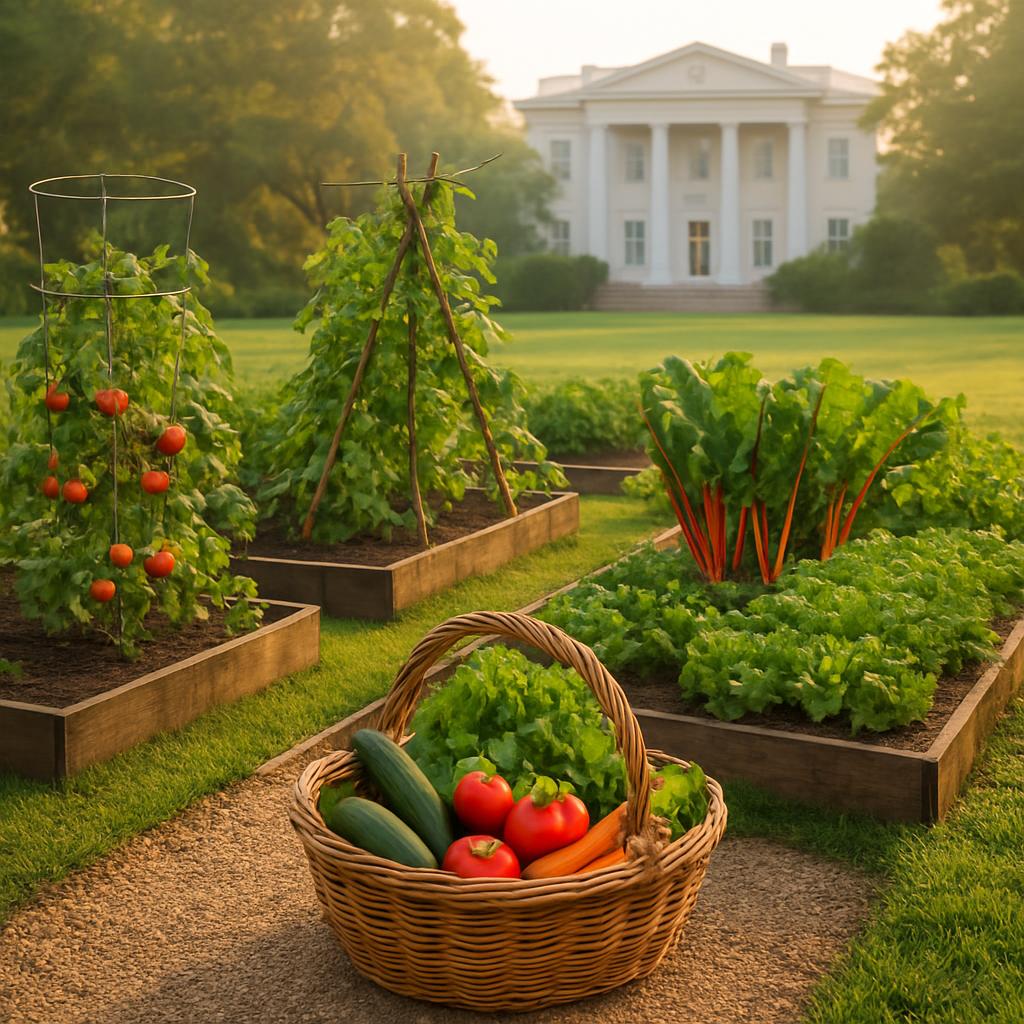
The White House vegetable garden is the Kitchen Garden on the South Lawn, planted by First Lady Michelle Obama in spring 2009 and still maintained today. It was the first major food garden on the grounds since Eleanor Roosevelt's World War II victory garden, and it helped turn a wartime idea into a modern home-growing movement. This guide covers the garden, the victory garden history behind it, what has happened since, and how to plant a victory garden of your own.
Key takeaways
- Michelle Obama broke ground on March 20, 2009, and students helped plant the garden on April 9, 2009.
- The first plantings were everyday crops: lettuces, spinach, broccoli, onions, carrots, peas and herbs.
- Victory gardens began as war gardens in World War I, and by 1944 an estimated 18 to 20 million American families were growing about 40 percent of the country's vegetables.
- The Kitchen Garden remains in use, but in spring 2026 visitors could only view it from a distance.
- A modern victory garden works best with a few high-yield, repeat-harvest crops: tomatoes, beans, chard, summer squash, carrots and salad greens.
When was the first White House vegetable garden since WWII planted?
The garden was planted in spring 2009. According to the Obama administration's own records, Michelle Obama broke ground on March 20, 2009, with help from local schoolchildren. Students returned on April 9 to plant it for the first time. The plot sat on the southwest end of the South Lawn, and it was the first major vegetable garden at the White House since Eleanor Roosevelt's victory garden during the war.
The idea was not new to the executive mansion. The National Park Service notes that John Adams asked for a vegetable garden even before he moved in during November 1800. Presidents after him kept kitchen plots of their own, and Thomas Jefferson, who ran one of the most ambitious vegetable gardens of the era at home, is the best-known example. His methods are covered in our piece on what Jefferson grew at Monticello.
What set the 2009 garden apart was visibility. It was a working food garden on the lawn, in view of the public, and it was tied to a stated goal. Mrs. Obama described it as a way to start a national conversation about health and wellbeing, and that conversation grew into her Let's Move! campaign against childhood obesity, launched in 2010.
What was grown in the Obama White House vegetable garden?
The first plantings were cool-season staples and herbs. CNN reported at the time that the plan covered butterhead and red leaf lettuce, spinach, broccoli, onions, carrots and peas, along with herbs including sage, oregano and rosemary. It was an organic garden, laid out as an L-shaped plot of roughly 1,100 square feet.
The garden produced through the seasons, not just in one summer. Seasonal crops were rotated in as the weather changed, and the harvest went to the First Family, to official events such as state dinners, and to a local soup kitchen. The administration's online tour named Miriam's Kitchen, a nearby homeless shelter, as one recipient of surplus produce.
Other features were added over time. A beehive installed in 2009 was the first documented hive on the South Lawn. In 2014 a pollinator garden went in beside the vegetables to support bees and monarch butterflies. The garden also became a teaching space, with students from Washington schools helping to plant and harvest each year. Mrs. Obama later wrote a book about it, American Grown, with proceeds going to the National Park Foundation.
Where did victory gardens come from?
Victory gardens started as war gardens in World War I. The movement began in England and spread to the United States, where food was needed to feed troops and allies overseas. One historical account puts the count at about 5.3 million war gardens by 1918. The term victory garden itself was coined only after that war ended.
The idea worked because it freed up commercial farm output and railroad capacity. Every family tomato or bean row meant a little less pressure on canned and shipped food. Vacant lots, schoolyards and backyards were turned into plots, and community groups and schools led much of the effort.
The wartime framing also gave gardening a moral meaning. Planting a row was presented as a civic act, not a hobby. That framing is the reason the term survives a century later, and the reason writers reached for it in 2009.
How did World War II victory gardens work?
When the United States entered World War II, the government revived the campaign and backed it officially. The Smithsonian notes that Washington, skeptical at first, came to support victory gardening, citing its health, recreation and morale benefits. Posters, pamphlets and local garden clubs spread the message, and rationing of canned goods made homegrown produce more valuable.
Participation was huge. Smithsonian Gardens reports that by 1944 between 18 and 20 million families were growing roughly 40 percent of the vegetables in America. Gardens appeared in backyards, on rooftops, in city parks and on vacant lots. Surplus summer crops were canned for winter.
Eleanor Roosevelt planted a garden on the White House grounds in 1943 to promote the effort by example. It was the model that the 2009 garden was measured against. After the war the movement faded: the Smithsonian notes that suburban growth led many gardeners to prefer private backyards over community projects, and the White House plot was returned to lawn.
Why did the 2009 garden spark a home-growing revival?
It landed at a moment when many households already wanted to grow food. The recession had squeezed grocery budgets, and seed companies were seeing demand they had not seen in decades. CNN reported that the National Gardening Association expected 43 million households to grow some of their own food in 2009, up 19 percent from the year before, and that Burpee had seen a 25 to 30 percent jump in vegetable seed and plant sales.
Advocates had in fact lobbied for the White House garden beforehand. Roger Doiron of Kitchen Gardeners International led a petition asking the new president to plant one, and he pointed to the wartime gardens as the precedent. Once the garden went in, the press framed the broader surge as a return to victory gardens, and some called the new plots recession gardens.
The motives behind the boom were mixed. Survey respondents cited better taste, lower grocery bills and food safety. The savings claims from the time were optimistic, and a first-year garden often returns less than promised. Even so, the surge held up: the NGA reported that spending on food gardening reached about $3 billion in 2009 and stayed at that level the following year. Our guide to growing a recession garden covers the budget side of that trend.
What has happened to the White House Kitchen Garden since?
The garden has survived four administrations. The National Park Service describes the current Kitchen Garden as the one planted on the lower South Lawn by Michelle Obama in 2009, and says it has supplied thousands of pounds of local produce for the White House since then. It continues to provide vegetables, fruits and herbs for the first family and guests.
Later first ladies made changes around the edges. Melania Trump hosted harvest events with a Washington youth club in 2017. In 2021 Jill Biden added a floral cutting garden at the north end of the plot, according to the Park Service. The garden itself has stayed largely in place while other parts of the grounds changed.
Public access has narrowed, however. CNN reported from the April 2026 spring tour that the Kitchen Garden was closed off from public access, so visitors could look at it but not walk near or through it, unlike in earlier years. The White House's announcement for the October 2026 fall tours again listed the Kitchen Garden and an expanded beehive among the stops. Check the tour announcement for the current year before planning a visit, since routes change.
What is the difference between a kitchen garden and a victory garden?
A kitchen garden is a small plot near the house for herbs, greens and quick vegetables, while a victory garden is built to supply a meaningful share of a household's food. The White House garden is technically a kitchen garden. It feeds a kitchen and teaches visitors, but nobody expects it to replace a grocery run. Calling it a victory garden is a nod to the tradition, not a description of its scale.
A modern victory garden borrows the wartime logic: put the space into crops that give the most food for the effort. That means favoring plants that keep producing, store or preserve well, and grow vertically. It also means skipping low-return crops that take a lot of room, such as full-size sweet corn in a small yard, unless you want them.
Modern motives differ from the 1940s, and that is fine. Few households need a garden to avoid hunger, but many want fresher food, a hedge against price swings, or a use for a lawn they would rather not mow. The method is the same either way.
Which high-yield crops belong in a modern victory garden?
The best victory garden crops are the ones that keep giving from one planting. Tomatoes, pole beans and chard fit that description. Harvest to Table's small-garden list notes that trellised tomatoes grow upward and produce heavily over many weeks, and that pole beans outperform bush beans in small spaces because they climb and keep setting pods. Wartime handbooks made the same point about beans.
Use the table below as a starting list. It mixes wartime favorites with crops that suit current small yards.
| Crop | Why it earns space | Harvest approach |
|---|---|---|
| Tomatoes | Heavy yield per plant; can be canned, frozen or dried | Stake or cage; pick as fruit ripens |
| Pole beans | Climb a trellis, so they use little ground | Pick young and often to keep pods coming |
| Bush beans | Quick, easy and good for succession sowing | Sow every couple of weeks |
| Swiss chard | Long season and tolerates some heat | Cut outer leaves and leave the center |
| Summer squash | Very productive in a sunny bed | Pick small and often |
| Carrots and beets | Store well in cool conditions | Pull when mature, before roots turn woody |
| Lettuce and spinach | Fast, and fit before and after warm crops | Sow in early spring and again in late summer |
| Potatoes | Calorie-dense and long-keeping | Harvest after the tops die back |
A caution on yield: output depends on sun, soil and care more than on the crop list. Most vegetables need about six to eight hours of direct sun, and a shady yard will disappoint even with the right seeds. Our roundup of the 10 most popular vegetables to grow at home covers variety choices in more detail.
How do you plant a modern victory garden?
Start with a plot you can manage, then follow the sequence below. A first-year garden that is too large usually ends in weeds, which defeats the purpose.
- Pick the sunniest spot you have and measure it. A raised bed, a lawn strip or even a row of large containers can work; a wartime New York handbook laid out a small plan of 20 by 40 feet, which is plenty for a beginner.
- Test the soil through your county Cooperative Extension office, then add compost based on the results. Where the ground is poor or paved, raised beds or straw bale gardening avoid the problem.
- Choose six to eight crops from the table above, and give half the space to the ones you will actually eat.
- Plant cool-season crops such as lettuce, spinach and peas as soon as the soil can be worked. Hold tomatoes, beans, peppers and squash until frost danger has passed and the soil has warmed.
- Build vertical supports at planting time, not later. Trellises for pole beans and cages for tomatoes are much easier to set before the roots spread.
- Plan successions. When spring lettuce finishes, sow bush beans in the same spot, then fall greens after that, so no bed sits empty.
- Water deeply and regularly, mulch to hold moisture and suppress weeds, and harvest often. Frequent picking keeps beans, squash and chard producing.
Preserving is part of the tradition. Wartime families canned summer surplus, and today freezing, drying and pickling do the same job with less equipment. Tomatoes and beans are the easiest places to start. If you want to follow the White House model, add a few herbs and a pollinator bed beside the vegetables, as the Kitchen Garden did in 2014.
Frequently asked questions
Is there still a vegetable garden at the White House?
Yes. The Kitchen Garden Michelle Obama planted in 2009 is still on the South Lawn and still supplies produce for the first family and guests, according to the National Park Service. Public access has been limited recently, since visitors to the spring 2026 tour could only view it from a distance.
Who planted the first vegetable garden at the White House?
John Adams requested a vegetable garden before he moved into the White House in November 1800, so food growing on the grounds dates back to the earliest years. Eleanor Roosevelt planted a victory garden there in 1943, and Michelle Obama planted the current garden in 2009.
How much food did victory gardens really produce?
By 1944, an estimated 18 to 20 million American families with victory gardens were providing about 40 percent of the country's vegetables, according to Smithsonian Gardens. Exact tonnage figures vary between sources, so treat them as estimates.
Can you visit the White House Kitchen Garden?
The garden is usually included on the free spring and fall garden tours, for which timed tickets are handed out the day of the tour by the National Park Service. In spring 2026, visitors could not walk through it. Dates and rules change each year, so check the White House tour announcement.
How big should a first victory garden be?
Small enough to maintain every week, such as one or two raised beds or a few hundred square feet at most. Start with six to eight reliable crops, and expand the following year once you know what your soil and sun support.